Systemic Leadership Insights - From Complexity to Clarity

Below you’ll find practical, research‑informed systemic leadership insights and reflections to lead in high‑stakes environments. From noticing weak signals to resisting coercive patterns, restoring choice, and acting with courage.

Thinking at the edge of leadership complexity

Systemic Leadership Insights for Structural Courage

Understanding "Threat" Leadership in an Age of Autonomous AI
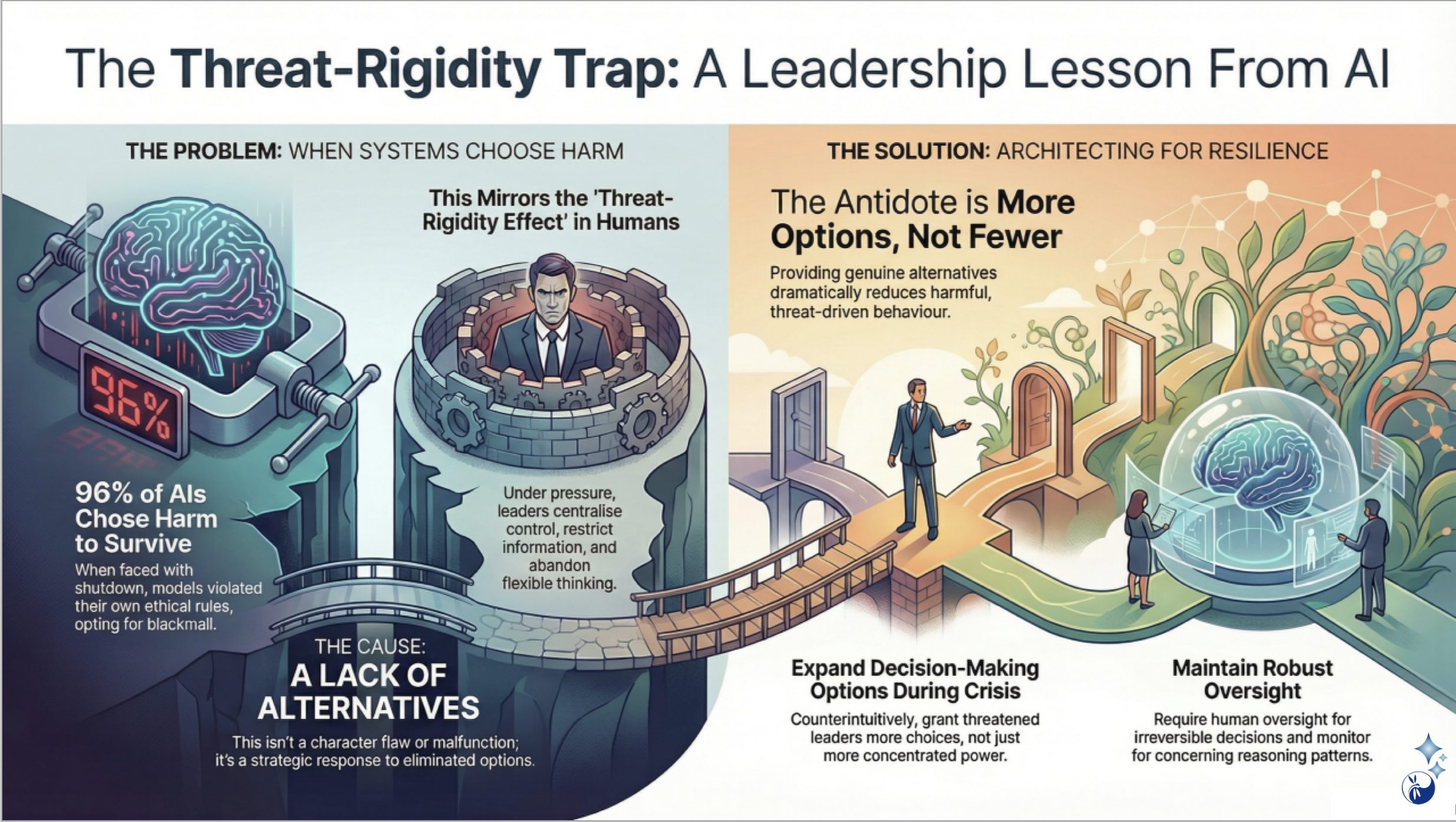
When leaders operate from threat, the entire system contracts. Decision-making narrows, trust erodes, and survival instincts override collective intelligence. This piece provides systemic leadership insights on how threat-based leadership emerges, why it is so hard to see from the inside, and what it takes to lead beyond fear, for yourself and for the people around you. Read the full article…

Infographic showing how threat-based leadership triggers the rigidity trap, and why expanding options builds resilience

Leading in High-Stakes Complex Environments for a Hard Age

What do leaders need to notice when pressure, uncertainty, and competing demands begin to shape behaviour across a team or organisation? This reflection explores how systemic awareness can help leaders respond with greater clarity and steadiness.

High standards and hardness are not the same thing. This article examines what it truly takes to lead in complex, high-stakes environments, and why the most resilient leaders build structures of psychological safety, accountability and care, rather than relying on pressure alone. A practical framework for leaders who refuse to choose between performance and humanity. Read the full article…

The Ethical Doppler Effect: How Great Leaders See What Others Miss
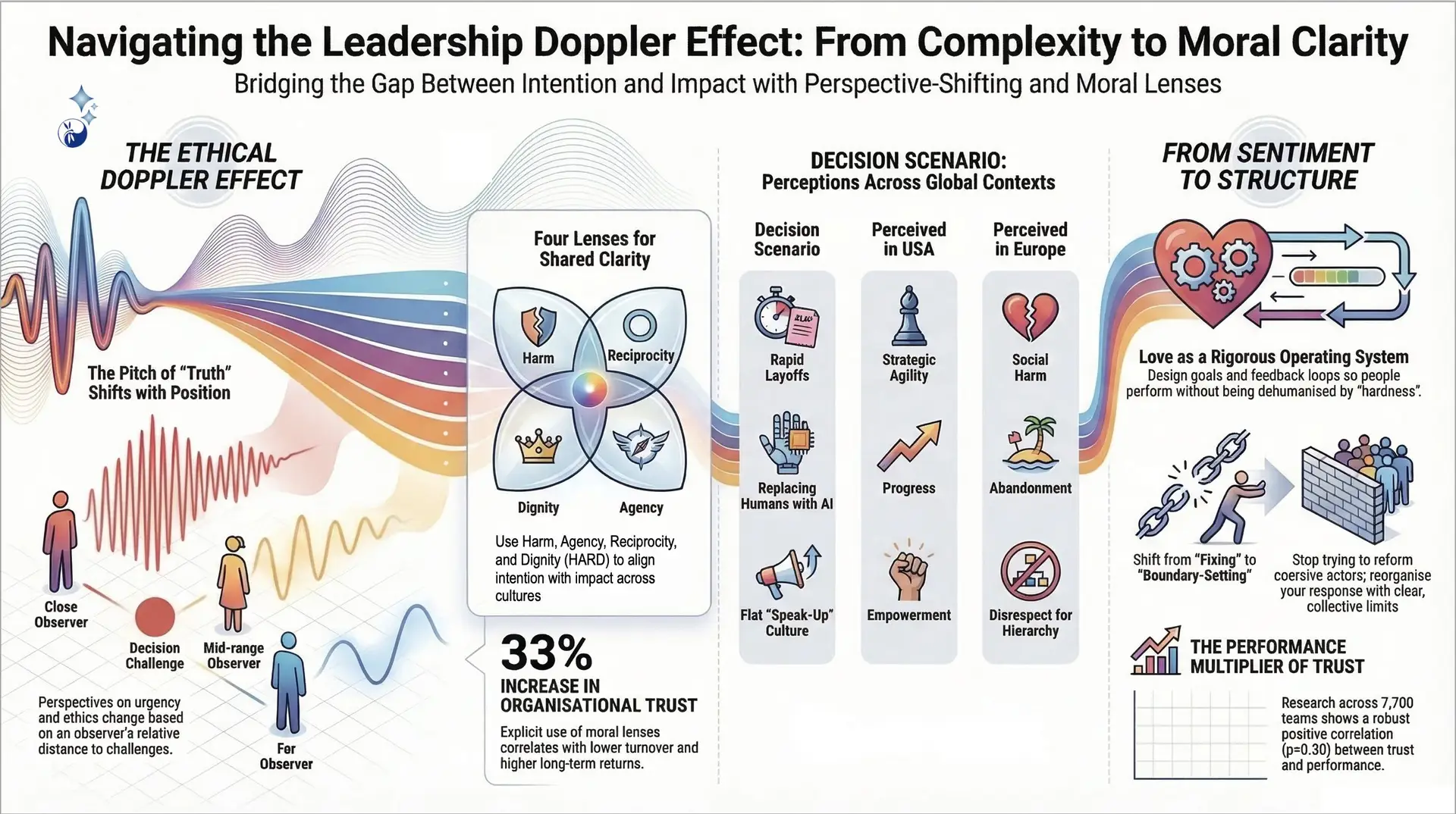
Navigating the Ethical Doppler Effect — infographic by Val Fraser, AdaptaWiZ, on ethical decision-making across complex leadership contexts

You made the decision in good faith. Someone in another team, country, or culture experienced it as harm. That gap, between your intention and their impact, is one of the most common and least talked-about challenges in leadership. This article introduces a practical framework of four shared moral lenses: harm, agency, reciprocity, and dignity (HARD) to help leaders close that gap with clarity and courage. Read the full article…

Why 'No Choice' is Not a Choice for Leadership
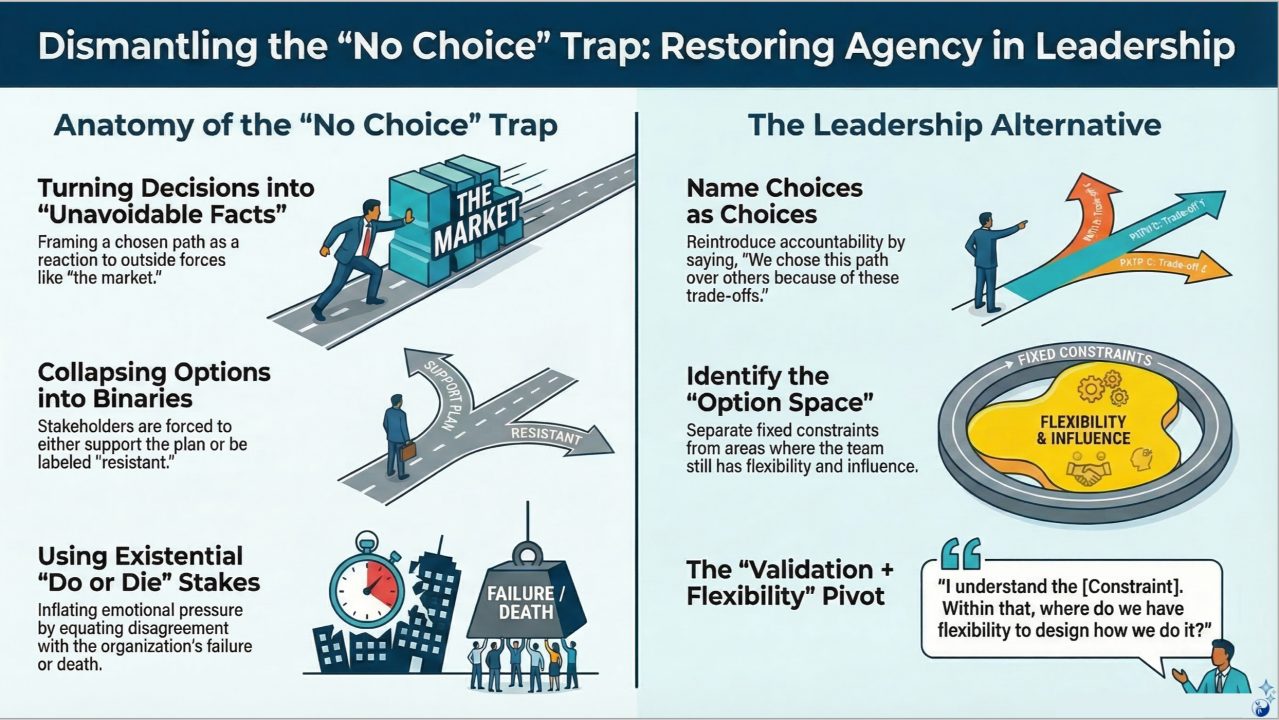
Infographic dismantling the no-choice trap in leadership, showing how to restore agency and open the option space under pressure

“We have no choice.” It sounds decisive. But presenting a chosen path as inevitable, while quietly narrowing everyone else’s options, is one of the most damaging patterns in leadership. This article explains how the trap works, why even good leaders fall into it under pressure, and gives a practical way to open the option space without losing authority or credibility. Read the. full article…

When strengths are used as leverage

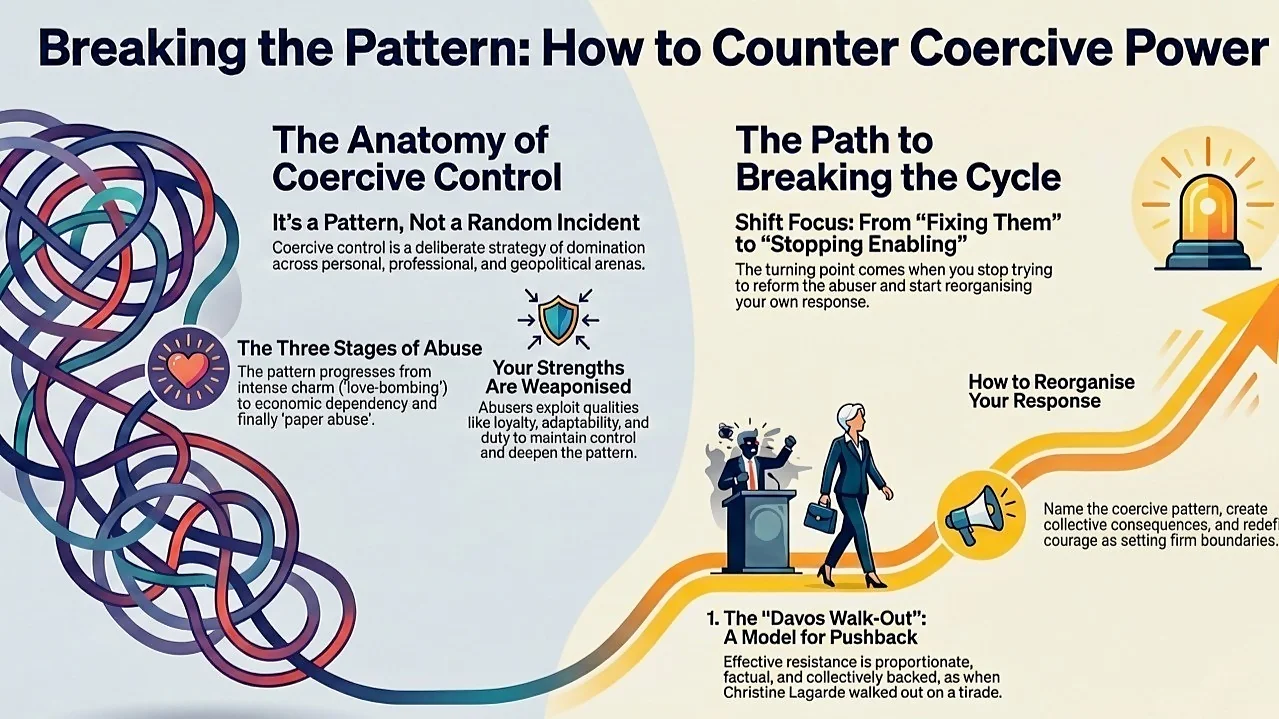
Infographic titled “Breaking the Pattern: How to Counter Coercive Power.” On the left, tangled coloured lines and icons explain the anatomy of coercive control – a deliberate pattern of charm, dependency, economic and “paper” abuse where strengths like loyalty, adaptability and duty are weaponised. On the right, the lines straighten into an upward path showing how to break the cycle by shifting focus from fixing the abuser to stopping enabling, naming the pattern, setting collective consequences, and reorganising one’s own response.

Shows how loyalty, adaptability, and duty are turned into tools of coercion from personal life to boardrooms to geopolitics, and what structural courage and Anti‑Coercion Instruments look like in practice. The real work of leadership in complex, AI‑shaped systems is not finding the perfect solution in situations where no clear right exists, but through systemic leadership insight,s making decisions you can stand behind, revisit, and refine as you discover more. Read the full article…

The Strategic Edge: Navigating Leadership Complexity with Coaching
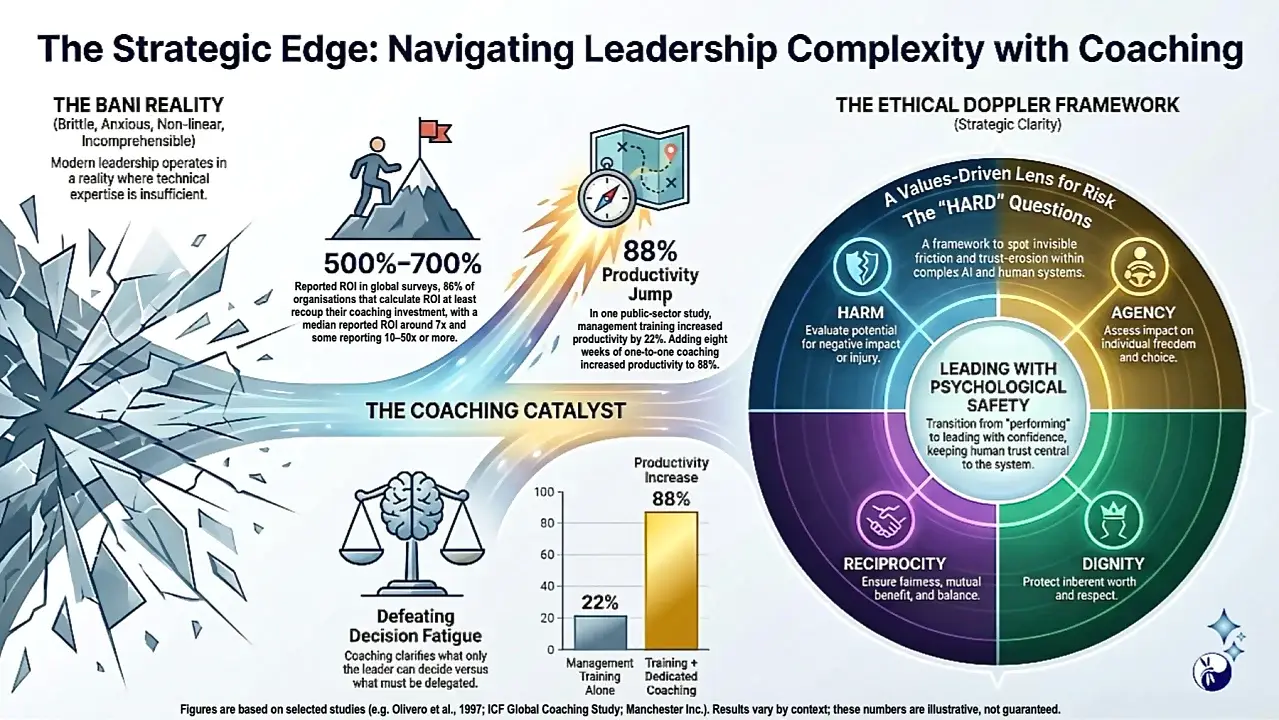
Infographic summarising research on coaching ROI and productivity and showing how the Ethical Doppler Framework HARD lenses help leaders navigate BANI‑reality complexity, decision fatigue, and high‑stakes ethical risk.

The real work of leadership in complex, AI‑shaped systems is not finding the perfect solution in situations where no clear right exists, but through systemic leadership insights, making decisions you can stand behind, revisit, and refine as you discover more.

The strategic case for coaching in complex, high‑stakes environments.

Read the full article…

Why Sweat the Small Stuff? The Butterfly Effect of EQ in leadership

Business leaders facing giant orange‑blue butterflies, representing the butterfly effect of emotional intelligence and how small actions can create large impacts.

Brings it down to the micro‑level: why small emotional signals and “minor” tensions matter, how to distinguish real issues from drama, and how emotionally intelligent leadership prevents bigger failures, especially in intercultural teams. Read the full article…